

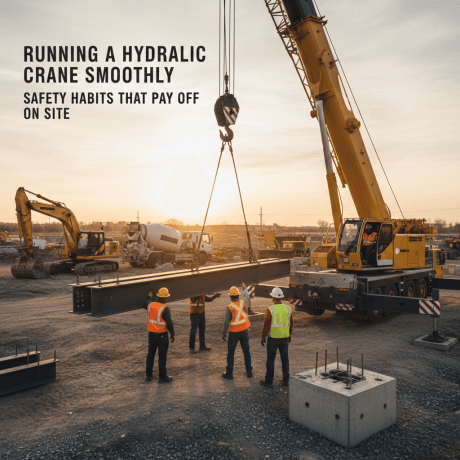
A hydraulic crane works on a simple principle. It uses hydraulic pressure to lift, lower, and control heavy loads with precision. On construction and industrial sites, this machine handles steel sections, concrete panels, machinery, and equipment every day. When the crew follows correct safety habits, the crane performs smoothly. When they don't, stress builds inside the hydraulic system, leading to instability, wear, and failure.
How a Hydraulic Crane Responds to Operator Input
A hydraulic crane operates by converting hydraulic oil pressure into controlled movement. The pump supplies oil to the control valves, which direct flow to the boom, hoist, and swing cylinders. Every control input from the operator changes oil flow inside the system, and the crane reacts immediately.
Smooth control lets oil move normally through the crane. The boom lifts steady and the load stays in control. When controls are pushed too fast, directions change suddenly, or the load is not balanced, pressure builds up inside the hydraulic lines. Over time, this extra pressure damages seals, weakens hoses, and puts stress on the crane parts.
Safety Habits That Keep a Hydraulic Crane Running Smoothly
Walk Around the Crane Before Starting
Before you start the crane, take a walk around it. Look under the machine for oil drops. Check hydraulic hoses for cracks, cuts, or swelling. Look closely at wire ropes and hooks. If you see broken wires or a bent hook, don't ignore it. These parts take the full load and wear out first.
Catching small problems early saves you from breakdowns during lifting.
Check Hydraulic Oil and Controls
Hydraulic oil decides how smoothly the crane moves. If the oil level is low, the crane feels slow and uneven. If the oil is dirty, it damages pumps and valves. Always check the oil level and see if it looks clean before starting work.
Move the control levers and feel the response. They should move freely and respond immediately. If the controls feel heavy or slow, stop and get it checked before lifting.
Check the Ground Where the Crane Stands
A hydraulic crane pushes a lot of weight into the ground. Soft soil, filled areas, or wet ground cannot handle that load properly. Ground conditions keep changing on sites, so never assume the surface is safe.
If the ground looks weak, use crane mats or steel plates. They spread the load and stop the crane from sinking or leaning during a lift.
Use Outriggers the Right Way
Outriggers keep the crane steady. Always extend them fully and make sure they sit properly on the ground. Lifting with half-set or uneven outriggers makes the crane unstable and stresses the frame.
A level crane feels better, lifts safer, and stays under control.
Know the Load Before Lifting
Never guess the weight of a load. Crane capacity changes with boom length and reach. Always check the load chart and include the weight of slings, hooks, and other lifting tools.
Overloading puts extra pressure on the hydraulic system and shortens the crane's life.
Move the Crane Smoothly
Fast lifting and sudden stops hit the hydraulic system hard. Pressure rises quickly inside hoses and cylinders. Lift, swing, and lower the load slowly and steadily.
Smooth movement keeps pressure under control and protects the crane's internal parts.
Keep the Load Straight and Balanced
The load should hang straight under the hook. Side pulling bends boom sections and puts stress on swing parts. Good rigging keeps the load balanced and stable.
A straight load is easier to handle and safer to place.
Stay Focused During Operation
Operating a crane needs full attention. Watch how the load moves and how the crane responds. If you hear strange sounds, feel vibration, or notice slow movement, something isn't right.
Staying alert helps stop small issues from turning into big problems.
Use Clear Signals on Site
Only one person should guide the lift. Mixed signals cause sudden movements and loss of control. Use clear hand signals or radio calls and stick to one signal person.
Clear communication keeps lifting safe.
Do Maintenance on Time
Hydraulic parts wear out slowly. Regular servicing checks hoses, seals, filters, valves, and pressure settings. Doing maintenance on time keeps the crane reliable and avoids site breakdowns.
Planned service always costs less than emergency repair.
Replace Worn Parts Early
Hoses, seals, and pins don't fail suddenly. They show signs first. Changing them early prevents oil leaks, downtime, and unsafe situations.
Timely replacement keeps the crane ready for daily work.
Final Thoughts
A hydraulic crane is not just a machine on site, it is something constructors trust in terms of their site-work and safety every day. When it is checked properly, set up right, and handled with care, it does its job without any trouble.